Saturday, July 12, 2014

Mount Fuji Area, Introduction

Actually, I moved from Nagoya to Fuji-yoshida in April, 2014. I started to work as a researcher at Mount Fuji Research Institute of Yanamashi Prefecture, Japan. I have been very busy since I moved to Mt. Fuji area and I have not reported yet about this region.

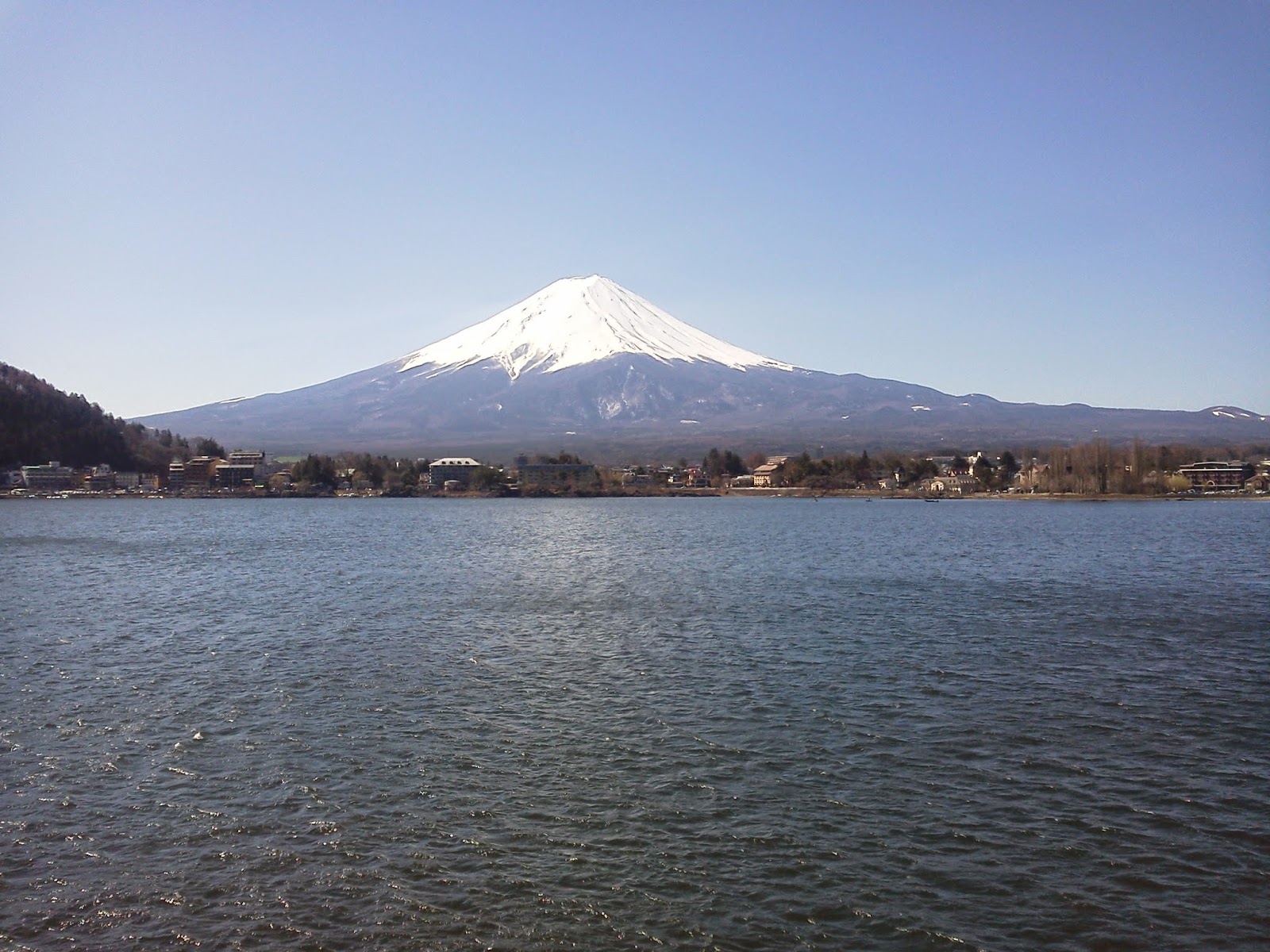
Mt. Fuji from from the coast of Lake Kawaguchi-ko.
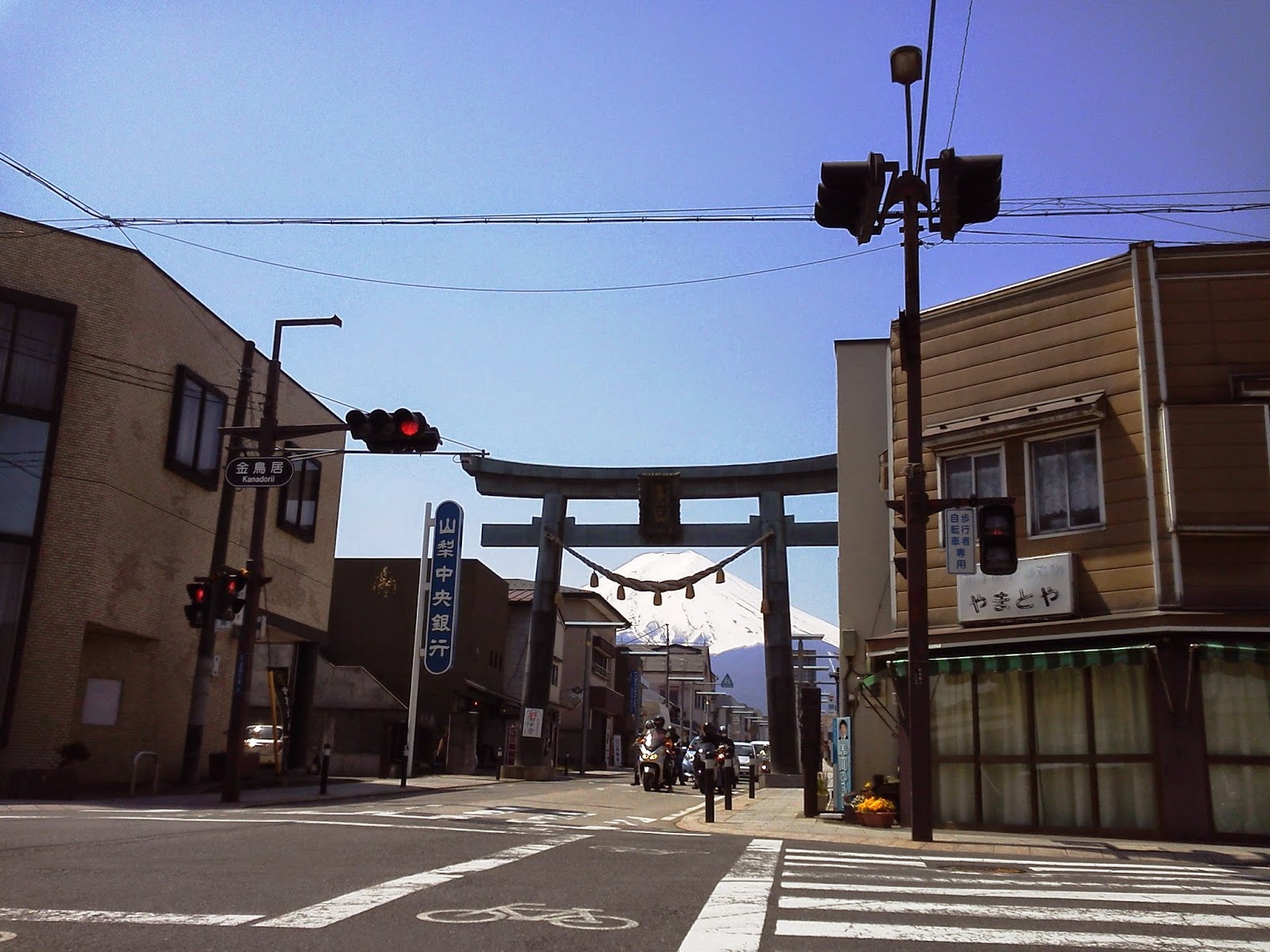
Mt. Fuji from a shrine gate "Kanadorii"

Our institute is at the north foot of Mt. Fuji. So I live in the town in the north region. Near my house, we can see Mt. Fuji from everywhere. One example is from "Kanadorii" which is a gate of the shrine "Sengen-jinja".

Mt. Fuji from a family restaurant "Gusto".
I often go to a family restaurant to have a breakfast (as it is cheap and I can read a newspaper there). From the restaurant, I can see Mt. Fuji so well.
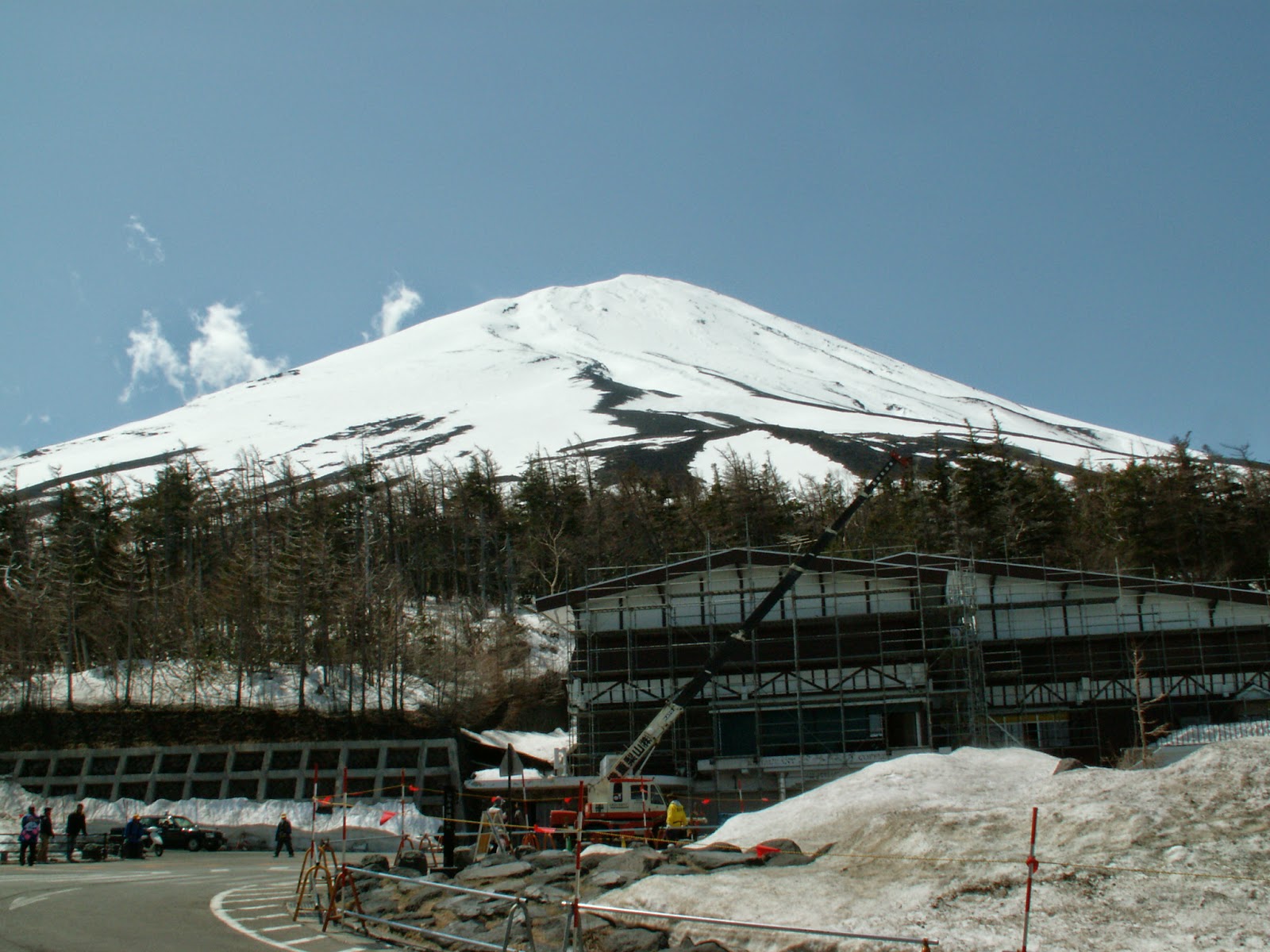
Mt. Fuji from the 5th station in the end of April.
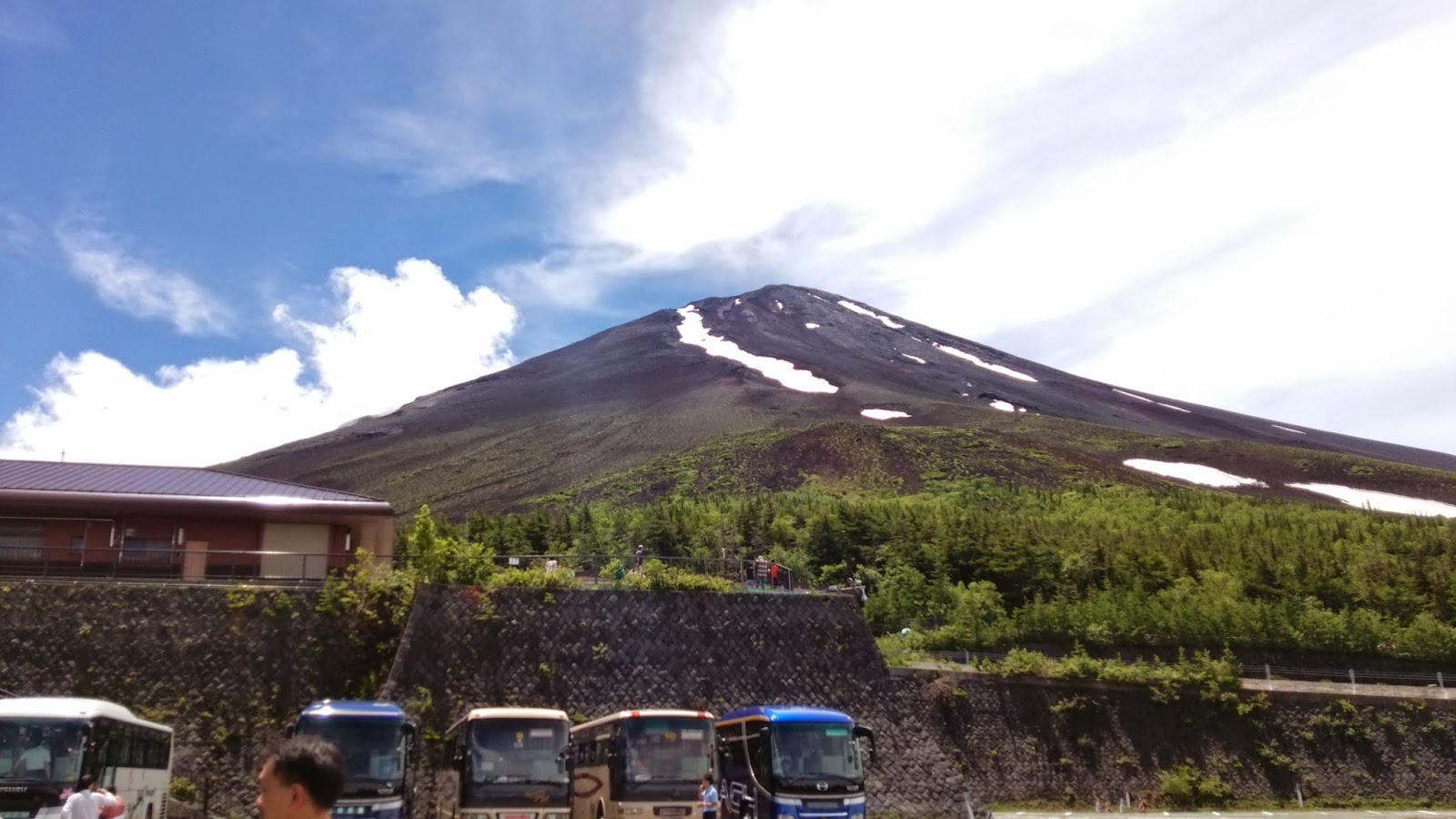
Mt. Fuji from the parking lot of 5th station in the beginning of July.
Mt. Fuji is often painted with snow on top,but it melts in summer.You can see the difference in scenery  of April and July.
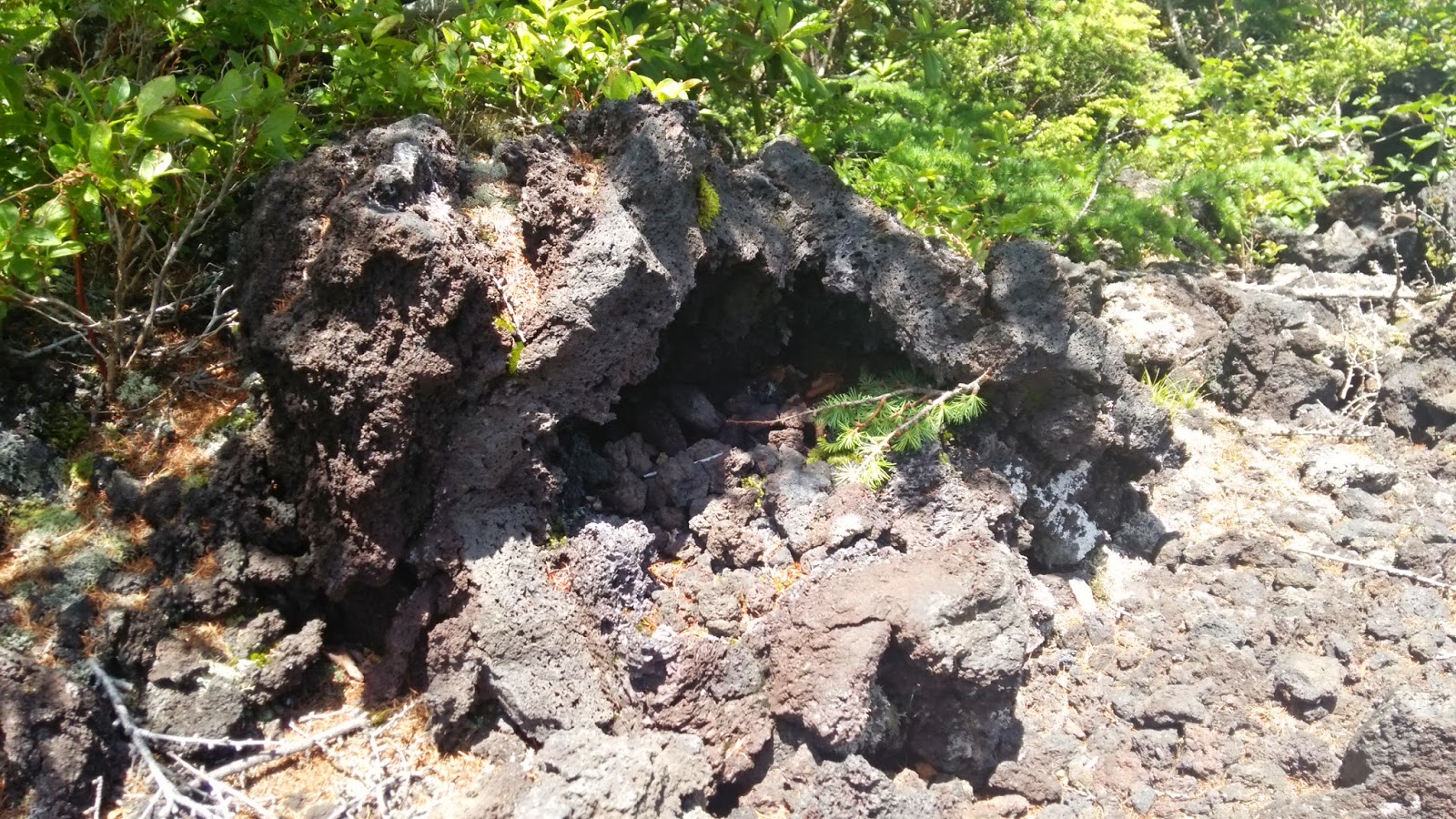
Volcanic ejecta found around 4th station of Mt. Fuji.
I would like to add one comment that Mt. Fuji is a volcano. It's recent activity was in 1707 and the seismic activity was detected in the deep side of the mountain around 2000. So this mountain still has a possibility to erupt (active volcano!). This is a reason why we, volcanologists are employed to study volcanic activity of Mt. Fuji.

Wednesday, March 19, 2014

Atsuta Jingu

Atsuta Jingu is one of the most famous shrine in Japan. It is in Nagoya city but I haven't visited this place before. My friend visit Nagoya and so we went there together. Actually, our first aim to go to Atsuta is to eat Hitsumabushi. "Hitsu" means a wooden container of rice. And "Mabushi" means...? I am not sure. In some region (such as Kansai district) they call it also "Mamushi". I guess its origin is "Mammeshi" which means rice with eel. Yes, Histumabushi is rice with grilled eel on top.
A set of Hitsumabushi lunch! by Atsuta Houraiken
 There are three steps to eat this Histumabushi. 1st, Eat rice and eel simply. 2nd, Eat rice and eel with spices. 3rd Eat rice, eel and spice with hot soup called "Dashi". Dashi is soup of fish or seaweed (In red pot of the photo above), often used for Japanese cuisine.

Next step is to visit the shrine. I was impressed with a gate of Atsuta Jingu because it was very big but not too shiny.
The gate (Torii) of Atsuta Jingu
With some woods around, it looked literally awesome. Especially,it looked nice on such pleasant day.

Hongu (Principle palace) of Atsuta Jingu
Here is a Hongu which means a principle palace. We pray just at the entrance of Hongu but we couldn't enter inside.
The entrance of Hongu where people bow and pray
We crap hands twice and bow. Then we pray putting hands together for a while. I am not religious person but I like this moment because I can be very quiet and calm. I often think about my family and someone who is very precious for me but not together right at the moment. I hope my wish reaches to the god and good things come true.

Inside of Hongu entrance
We cannot enter inside of Hongu. This makes us to feel the god of Hongu is so sacred. I imagine what is inside while it stays mysterious forever like this...

Ume (plum) tree with a lot of flowers.
Spring is the best season in Japan (I think). We can enjoy seeing flowers. It was too early to see cherry blossoms but we could enjoy plum flowers. I prefer plum as a symbol of my elementary school was plum. Plum is called "Ume" in Japan. Ume stays in cold weather during the winter and when the spring comes, they start to bloom at once. So with such cold winter, Ume can be beautiful. That was a way of teaching how to endure hard occasion to Japanese elementary students... When I was a child, I am honestly impressed with this story. I started to like Ume. In fact, the aroma of Ume is much better and stronger than cherry blossoms.

We see a couple just married by accident. They looked very happy and beautiful in the spring sunshine!
Just married couple


Then, at last... Sweets! This is a Japanese parfait with Marcha (green tea) ice cream, Dango (rice cake with a stick) and Anko (red bean paste). Also, there were some grains of rice at the bottom.

Dango parfait in Osu.
We had moved to Osu town in the center of Nagoya city from Atsuta. In Osu area, we can find many sweets shops and funny stores. It is very fun to walk around. I think Nagoyan (people in Nagoya) like Japanese sweets. I could find many sweets shops not only in Osu area but all over Nagoya.

Oh, I will stay in Nagoya only two weeks more. Next destination is not a bad place, but maybe I will miss Nagoya a little bit. A reason is... yes... Japanese sweets!

Thursday, January 09, 2014

New Year's Custom in Japan (Part 2)

I would like to introduce some more events for a new year.

Hatsumoude 初詣)is to go to the shrine/temple for the first time of a year.
Iseyama Koutai Jinguu (Yokohama, Japan) on January 3rd
It is a custom for our family to go to the shrine near our house. I don't know the reason why my parents chose this shrine but it is quite big and many people comes. This year, I went there on new year's day and January 3rd. The picture above is the shrine on 3rd. So it was not too crowded. On new year's day, there are so many people that we can't move quickly.

Why did I go there twice? because... I needed a special pray for my Yakudoshi. Yakudoshi is bad/unlucky year and we have to be careful during the year. And so we try to remove bad luck which is called "Yaku" in Japanese. Yakudoshi is defined by the age (please refer http://en.wikipedia.org/wiki/Yakudoshi). For me, this year is "Ato-yaku" which means unlucky year after the mainly unlucky year "Hon-yaku". In the shrine, "Kan-nushi"(priest of Shintoism) gives us a special pray called "Suzu-harae/harai" or simply "Harae". It is purification by removing bad things around me. I couldn't take a picture of this ceremony, but it is not too complicated. We were just standing in front of the god and bowing. The priest (Kan-nushi) say something (Norito) and did the action of cleaning us with white tool looks like a duster or broom. After the harai, we got a Ofuda (plate of lucky charm or bad-luck removing charm) with each name.There are some stalls for selling lucky charms. It is fun to see such colorful luck charms with various shapes. Some of them are in the shape of farming tool.
My Yakuyoke fuda (Ofuda)

Stall for selling lucky charms
 Another thing we always do in the shrine is to buy "Omikuji". It is a piece of paper with some words for predicting things in a year. There are some kinds; "Dai-kichi", "Chu-kichi","Sho-kichi", "Kichi", "Sue-kichi","Kyo" (from good to bad). This year, I got a "Kichi" which means good. Even with Atoyaku, I maybe have a nice year!!

Nanakusa-gayu (七草粥)
I ate a Nanakusa-gayu, this morning because it was January 7th. "Nanakusa" means seven herbs or weed. We memorize seven kinds as "Seri, Nazuna, Gogyo, Hakobera, Hotokenoza, Suzuna, Suzushiro" Haru-no Nanakusa. It is like a poem. "Haru-no nanakusa" means seven herbs in Spring because we also have "Nanakusa" in autumn. I thought we eat this as our stomach is so tired with many big meals during a new year's holiday. However, it seems that there is another meaning. Nonetheless we do not know the original meaning exactly.
Nanakusa-gayu which I cooked by myself
Mochi-tsuki (餅つき)
Mochi (Sticky rice cake) is indispensable for our new year's holidays and so we often have this event of making Mochi before the new year. Anyway, we had Mochi-tsuki in the campus of our university on 8th January. We could try beating Mochi with a Kiné (a big wood hammer). This hammer is heavy and so we need young power for making Mochi! In this event, we ate Mochi just after we made. Mochi is very soft and delicious when it has been just made. We ate with Kinako (powder of soy bean), Anko (red bean paste) and Oroshi (ground radish with soy sauce). I like sweet taste of Kinako and Anko. Oroshi was  also good with Mochi.
Mochi-tsuki of a girl
Mochi-tsuki of a young guy! We need  power for Mochi tsuki. 

Friday, January 03, 2014

New Year's Custom in Japan (Part 1)

Kagami-mochi

Flower at the entrance hall
New year's preparation starts from cleaning the house. Then, we decorate in our house with Kagami-mochi (rice cake) and flower arrangement.  We oftern include Senryo (red fruit plant) and Matsu (pine tree) in the flower arrangement.

Then, the biggest work is cooking Osechi which is new year's meal. For us, three days of new year are holidays. And so, we try not to cook at home for three days. Especially, it is meanigful for housewives, that they can have holidays only this period in a year. However... it is a big work!!
Although it is common to buy the Osechi from the department store or restaurant, my mom and I make Osechi as much as possible because it is a traditional cooking of Japanese cuisine, we think.
Here are some photos of preparation of Osechi.
Kuri-kinton
Namasu
Tazukuri
First one is Kuri-kinton which is chestnut and paste of sweet potato. This means financial good luck because the pronunciation of "Kin" is also for gold and money in Japanese. Namasu is vinegared white radish and carrots. As red and white is celebration color in Japan, this color contrast of Namasu means good luck in general. Tazukuri is small fishes with sweet sauce. It is also called Gomame. This is for wishing a rich harvest of rice.  Actually, sardins were good fertilizer of rice field.

New year's table with Osechi, Ozouni and Otoso
Oseshi foods are put into a box called Oju which is a red lacquered box. Oju consists of three boxes. We call Ichi-no-Ju, Ni-no-Ju and San-no-Ju There is a rule of putting foods into these three boxes but my family do not think too much about it. So I put them together without following strict rule. (please refer wikipedia or somewhere else about this rule). New year's meal is not only Osechi but also we have Ozouni or simply Zouni. Zouni is a soup with Mochi (rice cake). This soup and ingredients vary with location and family. Each family has each tradition. For my family, it is a soup of Dashi (soup of fish and seaweed) with chicken, carrots, Shiitake mashrooms and spinach. Yes, my mom put boiled egg for making it colorful! Then, the first thing we put into mouth on new year's day is Otoso.  Otoso is actually Japanese Sake (alcohol) with Toso-san. Toso-san is medical spices.This is for wishing good health.
 
As you see, there are many meanigs of new year's meal. I will tell you another custom for new year's day in a next blog...
For now,
Happy New Year!!
to you.
  

Sunday, December 15, 2013

Pain pour le weekend

A book of Swiss Cooking "Suisse Cuisine".
I was a bit sad this weekend, maybe because it is so cold in Japan! The weather forecast says that it is possible to have snow in Nagoya (I haven't seen it yet). So I decided to do an activity which makes me happy. I miss Geneva because I lived there more than four years. I have a book of Swiss cooking which was my supervisor's present when I got a Ph.D. As he knew  I like cooking, he gave it to me. It is also good for not forgetting French as this book is written in French.

I baked special bread for weekend and holidays in Switzerland. This is called "Tresse" in French and "Zopf" in German. Both means "Braid". You see the reason from the shape of this bread.

The dough of bread fills my small oven!


I have baked this bread when I lived in Geneva, and so there was no problem before baking. The dough leavened very well and looked nice. However, when I tried to put it into the oven, it touched the ceiling of the oven. My oven is mainly for the toast and very small. I managed to put my dough into the oven, while the bread was unevenly colored.

Baked Tresse
You see the bread is almost burned at the top center part, but edges are not even tanned. Anyway, the taste was good, as this includes a lot of butter (70g of butter used 500g of flour; two tresse as seen in the picture). I hope I can have a better oven next year and bake big Tress without worrying to be burned.

Actually, I can't eat so much bread only by myself. So I sent one (better colored) to my parents as yesterday was my father's birthday. Though he always says that he doesn't need anything for his birthday, I am sure he likes something we (my sister and I) bake. When we were teenager, my sister often bake a cake. Even though it was not very good, he liked it very much. Sometimes he requested my sister (and me) to bake a cake for special occasions.

Oh! and there is something interesting. I like to cook for the meal, but my sister liked cooking sweets. We don't have same taste nor similar brain...

Sunday, December 01, 2013

Fuji volcano workshop

Scenery from the hotel room (Hotel Noborizaka in Kawaguchiko town)

"International Workshop on Strategy of Volcanic Disaster Mitigation 2013" is held at Yamanashi Institute of Environmental Sciences(YIES). I went to the institute which located near Mt. Fuji because I am interested in the risk assessment of volcanic disaster.
I arrived at the hotel near the institute the night before. It was very dark and I couldn't see the scenery. Next morning, I opened the curtain of my hotel room and I was surprised with the beautiful scenery.  Wow, Mt. Fuji is very very close!!

Workshop at YIES
The workshop was interesting with active discussions. We raised many topics such as effects of volcanic ash, lapilli, collapse of volcanic edifice etc. Personally, I was happy to see my friend from New Zealand and talked about our collaboration. And I could see many important people for the risk assessment field in Japan and in the world.

After the workshop, I had a chance to go to the restaurant around. I found a Fuji-shaped croquette. I think that they are trying to make "Fuji-shape" products, for example cookies and cakes, after this area is registered as a World Heritage Site.
So, we have many tourists from various countries now. We went to the 5th station of Mt. Fuji next day. And we saw many tourists even though we can not climb up to the top during the winter and it was very cold there! (-4 C =24.8F).
Fifth station of Mt. Fuji (half height)
I heard Chinese and other languages. Nature guides told us that variety of tourists countries are increasing. Especially, Asian and Arabic people are coming more and more. Hmmmm, I think that it is very important to put some explanations in different languages. Actually, there have been already some guides and staffs who speak different languages at the 5th station and the visitor center. I was very impressed. The nature guide whom we talked with is a retired diplomat for foreign services and he speaks Arabic. I am so impressed!! 


Entrance  of Fujiyama Onsen
Finally, I was alone to wait for the bus to get back to my city. I had five hours and so decided to take a bath in Fujiyama Onsen. An entrance fee was a bit expensive, but it was good place to stay. They gave me towels and wears only for inside of this building. They gave me also a wristband with a bar code.  It means that we can store our luggage and clothes in the locker and only take a wristband. We can buy things with a bar code and pay everything when we leave.
Houtou of the restaurant in Fujiyama Onsesn
There is a restaurant inside and I ate "Houtou" there. You can find what this is in my old post (http://kaes-diary.blogspot.jp/2013_05_01_archive.html). This is one of my favorites!

It was tiring to come back to my home with four hours of bus + 30 minutes of subway. However, these two days were precious for me as a volcanologist and as a tourist.


Tuesday, October 15, 2013

Kiso-Komagatake

There are several "Komagatake" mountains in Japan. One Komagatake is a volcano in Hokkaido. I know one in Hakone in Kanagawa, and this Komagatake is called "Kiso-Komagatake". "Kiso" means the name of the region around Nagano and Gifu.
Direction of Komagatake peak from the lodge "Tama-no-kubo".

Tama-no-kubo lodge from a bit higher position.

We arrived at a lodge called "Tama-no-kubo" which is located between the peak of Komagatake and Maedake on Sunday night. We walked in the dark... and when I found the light of the lodge, I was so relieved. How happy I was when I started to eat the dinner there!
Next morning, we started to walk around 9:00. It was late as a hiker but two of us worked for the observation of stars during the night (though I was sleeping). So we tried to stay until late.
The mountain is made by granite (igneous rock). So it is not a volcano. We could see many master pieces of nature around the summit of Komagatake.
Granite rocks along the trail of Nakadake
 When we were walking around Houken-sansou (another lodge), we saw a helicopter carrying something.
Helicopter coming to drop off the burden.
Again carrying another burden and departing.
I had thought a helicopter can store a burden inside. No! It carried burden hanging at the bottom. It was nice to see the helicopter flying against the blue sky.

"Senjo-jiki" is a topography made by glacier and its shape is like a bowl. Literally, Senjo-jiki means the place covered by 1000 tatami sheets in Japanese. Japanese tends to call broad place "Senjo-jiki". Therefore, we can also find Senjo-jiki along the coast somewhere in Japan. Here, it is around the middle slope of the mountain. We can find alpine plants and bushes there, and it turns to red and yellow in autumn. So we expected to see such colorful scenery there. However, the season of colorful trees had already passed because a typhoon which attacked Senjo-jiki one week before blew all leaves from the bushes.
Senjo-jiki field

Small red fruits (Its name is unknown)
I found small red fruits instead. I don't know the name but it was pretty!

And... the colorful leaves are seen from the gondola (we call it "Ropeway") and around the bottom station of gondola, "Shirabi-daira". It will be a climax at the Shirabi-daira in one week. Then, this region will be "winter" in November as the altitude is high. Anyway, we were very lucky with the weather.
Scenery from a ropeway gondola
Scenery around Shirabi-daira, the bottom station of the gondola

Tuesday, July 30, 2013

16 years in volcanology-Part 2

In year 2000: I started my master. I studied about the dynamics of eruption and numerical models.
In this year, there were two major eruptions in Japan. "Usu" and "Miyakejima". However, I couldn't see any of these eruptions by myself. I only listened to TV news.
For my study, many seniors of our group helped me.  Master's degree in Japan is two years generally. After that, I decided to work for a computer company.

2002: I started to work for a computer company. Fortunately, I could work for the systems and analysis for hazard mitigation. One of my important projects in this company was to make an educational tool "Volcanic Simulator" for high school student (all in Japanese). So, I worked for some volcanological projects.

2003: I attended Cities on Volcanoes 3 in Big Island, Hawaii. It was a conference for volcanic eruptions and its hazard mitigation. At that time, volcanic activity in Kilauea was active and we enjoyed watching lava flows around the foot of Kilauea. I am attracted by Pele a goddess of Hawaiian volcanoes even though she is a woman!
Field trip of COV3. We were on the lava flow of Kilauea.

2005: I decided to quit my job for challenging to study abroad. It was my sister and her husband whom affected me. They had just finished their MBA in France. I said "Wow, it must be really nice experience to study abroad. I would like to try one day".

2007: Finally I got a PhD offer from University of Geneva in Switzerland. It was fantastic to have a PhD opportunity with good financial support. At the very beginning of my PhD, I went to Ecuador for the field work with other members from Geneva and from Italy.

Cotopaxi volcano and our group of field work from Geneva and Italy.

2008: I attended the meeting of International Association of Volcanology and Chemistry of the Earth's Interior (IAVCEI, 2008) in Reykjavik, Iceland. At that time, I talked with many researchers from other countries, but I tended to stick to Japanese acquaintance. I was not very open to other people because I had a lot of stress by living in foreign country. I wanted to speak in JAPANESE! I didn't feel that I was sad or lonely. However, I felt frustration of communicating in foreign language at that time. 
  Later, I got used to live in Geneva. I enjoyed a life in Geneva because I could take good classes of ballet and found some friends and nice cafés to enjoy. Probably, the life got easier when I started to speak French.

2010: Cities on Volcanoes 6 was held in Tenerife, Spain. In this conference, I started to communicate other researchers from all over the world. I was very busy everyday for discussions. Until the last moment of the last day of the conference, I discussed with someone about my research. I thought this conference was very successful for my study and career. After this conference, I started to contact other researchers from other countries.
Columnar joint of lava like a rose flower in Tenerife island

Discussing with other attendant of COV6
Year 2011 was hard time for me because I was writing my thesis. Early 2011, Japanese were shocked by the earthquake and tsunami in Japan. I guess all Japanese had somewhat mental problem even we are out from Japan. This hard period continued until very end of the year.
I canceled to attend the IUGG conference but I participated in the conference about Lagrangian modeling of atmosphere. (Conference site is here) It was unexpectedly interesting conference!
I could meet many people working for atmospheric modeling. My presentation was poster presentation and we discussed until midnight! I was exhausted but felt so satisfied. 
I finished writing my thesis about numerical modeling of Tephra dispersal and ballistic bombs on 30th December. I sent it to my supervisor and had a warm new year party at my friend's house.

2012: I defended my PhD! I became a doctor.

However, I had some problems of revising my thesis. And so, even though I moved to Hawaii, I couldn't enjoy my life 100%. I used my time and money for healing myself. I guess this period was very important for me because I looked myself and tried to understand. With this process, I met many great people. The land of Hawaii healed me gradually. Finally, I noticed that I love this land very much! So, you can see my posts in this blog.

This year (2013), I moved back to Japan. 
Just before coming back to Japan, I stayed in  Big Island with Prof. Ui (professor emeritus of Hokkaido University) and Prof. Yoshimoto (assistant professor of Hokkaido  University). We had field trip together in Big Island and I could have chance to see many geological points where I wanted to visit. Actually, these two professors were supervisor and student. They are connected strongly. Although I was not in Hokkaido University, I feel strong connection with them probably because we all have a passion for hazard mitigation and geological work of volcanology.
Field trip around Green Sand Beach in Big Island with students and two professors from Hokkaido University.

Then, IAVCEI meeting was held in Kagoshima from 20 to 24 July.
My poster for IAVCEI 2013

Now, I have many friends in Japan and in other countries. They all support me. Otherwise, I would not be here as a volcanologist. I feel wonderful to work as a volcanologist and I would like to say THANK YOU to everybody who supported me.
My work and my life as a volcanologist continues...